
Sponsored Agents Are Coming to ChatGPT Ads. The Lead Handoff Will Decide the Return.
A sponsored conversation can answer a shopper’s question before the website visit. Buyers should measure whether it creates an accurate, consented, useful next step—not just another chat.
Published September 24, 2026

A shopper sees an ad for a dining table and asks whether it fits a small apartment. The answer may now come from a business-sponsored conversation inside ChatGPT, before the shopper visits the seller’s site. That is a promising service moment. It is also a new place to lose the sale: a confident answer with the wrong dimensions, a conversation that never reaches the merchant, or a lead sent to an owner who cannot act.
What OpenAI announced—and what is still a test
On September 16, OpenAI said it was testing Sponsored Agents with select advertisers in the United States. After an ad click, a user can choose a clearly labeled conversation with a business-sponsored agent, ask follow-up questions, and follow a link to the business’s website. OpenAI says that conversation is separate from the user’s original ChatGPT conversation and from ChatGPT’s independent answers. The company also announced ChatGPT Ads connections with HubSpot and Shopify for campaign management and performance tracking. Those are product facts from OpenAI, not evidence that sponsored conversations improve conversion or customer satisfaction.
The new unit of work is the question after the click. A conventional landing page can be checked for claims and links. A conversation creates many possible claims about fit, availability, eligibility, returns, or delivery. Marketing, product, legal, and service teams need a shared answer source before they need a clever prompt.
Design the handoff before buying the traffic
Write down what the agent may say, where it gets each answer, and what happens when the answer is missing. Product dimensions and current stock should come from maintained records. Offers need dates and eligibility. Advice about a complex financial or health product may require a human path. If the conversation cannot find a reliable source, it should say so and route the question—not improvise a persuasive answer.
Then define the event that actually matters. A conversation start is not a lead; a lead is not a qualified opportunity; an opportunity is not a sale. For a retailer, a useful next step might be an item viewed with verified dimensions and a completed purchase with an acceptable return rate. For business-to-business sales, it might be a consented inquiry that reaches the right owner with the prospect’s stated need intact.
- Knowledge: Who owns product facts, prices, availability, and the date each answer was last checked?
- Boundary: Which questions must route to a person instead of receiving a generated answer?
- Handoff: What information may be passed to the website, store, or customer relationship system, and with what consent?
- Attribution: Can the team distinguish a sponsored conversation from other search, direct, and ad traffic?
- Recovery: How does a merchant correct a wrong answer and find affected conversations?
Measure the full path, not chat engagement
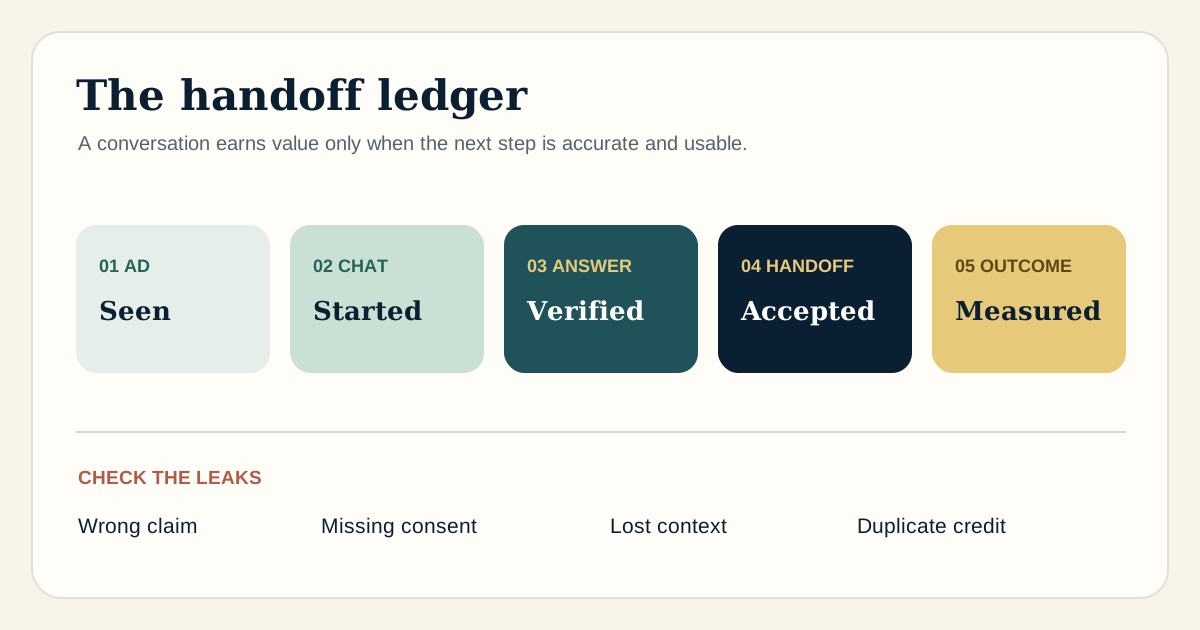
Create a test ledger with five rows: ad impressions, voluntary conversation starts, useful answers, accepted handoffs, and downstream outcomes. Divide each stage by the one before it. Add a quality column for materially wrong or unsupported answers. Keep a comparable campaign or audience as a reference; a lift in conversation starts without a lift in accepted outcomes can be an expensive detour.
HubSpot and Shopify integrations may make the operational data easier to reach, but the announced connections do not establish a universal attribution method. HubSpot documents URL tracking for ad clicks and a beta conversion-event sync that can send contact fields back to ChatGPT Ads; it says contacts should have given permission before their data is shared. Ask exactly which event moves to each system, which fields are sent, whether the customer consented, and how duplicate records are resolved. A neat dashboard can still count a prospect twice or credit a sale that would have happened anyway.
Where the idea faceplants
A sponsored agent answers a compatibility question from stale catalog data. The customer clicks through, sees a different specification, and leaves. A campaign dashboard records an engaged conversation; the business records a return or support contact. Another agent gathers an elaborate buying brief but the lead enters the customer relationship system as a generic form fill. Sales calls without the context, and the prospect repeats everything. Both failures are handoff failures, not failures to make the bot more conversational.
For a first test, choose one product family or one narrow lead type. Prepare fifty real questions from search terms, support tickets, and sales calls. Have a product owner score each answer for factual accuracy, clear limits, and a useful next step. Only then spend on a limited campaign. Stop if material misinformation, missing consent, or wrong-owner handoffs exceed the threshold set before launch.
The skeptical read and the next signal
OpenAI’s announcement describes a limited advertiser test, not a mature channel benchmark. Early-adopter results, if released, will likely mix novelty, audience selection, and merchant execution. The evidence worth watching is repeatable cost per accepted outcome, with answer quality and customer remedy included. If the conversation helps a buyer decide and reaches the business intact, it may earn a place in the channel mix. If it only grows the conversation count, it has not.
Primary sources
- OpenAI: Reimagining advertising with AI — September 16 Sponsored Agents test and HubSpot/Shopify integration details.
- HubSpot: connect and manage ChatGPT Ads — Official integration and attribution setup.
- HubSpot: conversion-event sync — Beta event sharing, consent, and contact fields.
Put this to work
- AI lead-routing scorecard — Test assignment, exceptions, and first eligible owner.
- CRM and sales tool guide — Compare the systems that receive and work the lead.
Weekly Newsletter
AI Adoption Weekly
New research, field guides, training studies, and tool decisions for operators.
No spam. Unsubscribe anytime.
Related Comparisons
Calculator
AI seat cost calculator
List price × headcount. You enter the hours and the operating assumptions.