
What Sam Altman’s AI-Work Interview Means for Company Adoption
Sam Altman describes agents that guard his mornings, build from rough notes, and keep documents alive. Here is the useful company-adoption lesson—and the evidence you need before copying his setup.
Published October 10, 2026
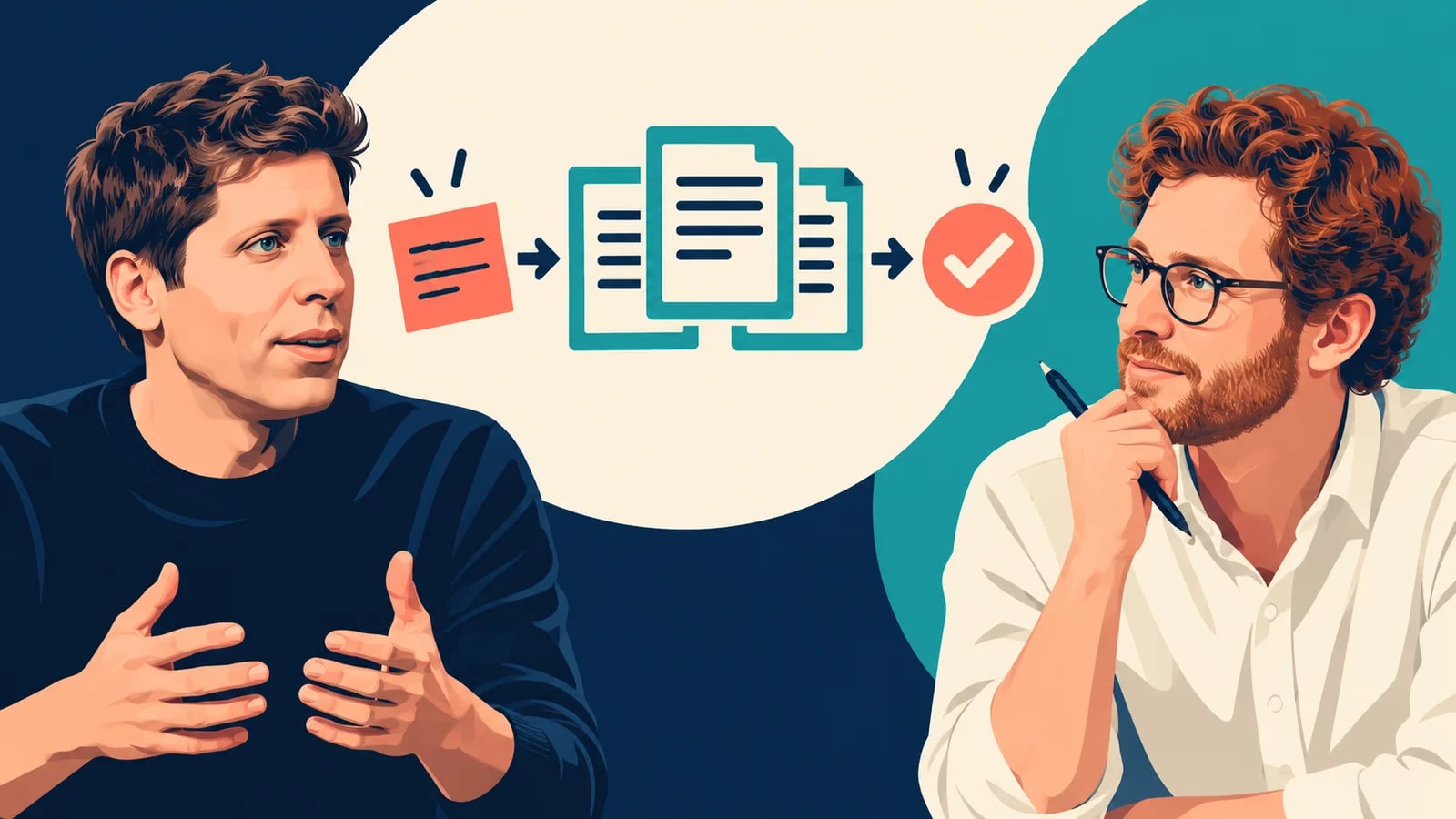
What should a company do when AI can keep working after a person closes the chat window? That is the business question under Dan Shipper’s September 30 interview with Sam Altman. Altman describes an AI assistant that filters what needs his attention, develops versions of an idea from rough notes, searches across his messages, and maintains a changing business summary. It is an unusually clear glimpse of how a leading AI executive actually wants to work. Altman also runs the company selling this product. His account is useful firsthand evidence of his workflow, not an independent measure of what another company will gain.
My reading: the opportunity is not to automate an executive’s entire day. It is to stop forcing valuable work to restart every time a person changes tools, closes a document, or hands a task to someone else. The right first test is a small, continuously updated piece of work with a named owner and a visible source trail. That test can be done with today’s tools, including tools other than OpenAI’s.
What the interview actually says
Altman and Shipper recorded their conversation around OpenAI’s September 29 developer event. The original transcript ranges across coding, small companies, new products, speed, and AI agents—systems that can plan and carry out several steps rather than answer one prompt. Four moments are worth keeping together.
- Altman says better coding tools have not made developers irrelevant in his experience. They can make more, while expectations for what they deliver rise. That is his observation and forecast, not a general employment study.
- He says his own persistent agent helps him protect early-morning thinking time by surfacing what is genuinely urgent and leaving less important messages for later. This is a personal account, not a measured workplace outcome.
- He describes giving a rough feature idea to an agent, receiving several versions, and iterating in spare moments. He also says he still likes to write a new idea himself because writing helps him think.
- He describes “live documents” that update as people or circumstances change, including a business summary tailored to what currently matters to him. He also concedes the present software setup is not naturally designed for close collaboration among people and their agents.
Shipper’s side of the conversation is important. As an early user, he says the product has been buggy and describes the appeal of an agent finding a meeting mentioned in a message but absent from his calendar. Altman agrees there is work to do. That exchange is more useful than treating a launch demonstration as a finished operating model: there is a real benefit, but reliability and access to context still need testing.
The first lesson: preserve the person who knows what matters
A manager’s first note does more than give the system instructions. It states the problem, the trade-off, and what a good outcome would look like. Altman says he still writes a new idea himself, then hands off follow-up work. That division is easy to miss in stories about an AI working overnight. The valuable handoff begins with a human judgment that the software cannot infer from a pile of messages.
Imagine a regional operations leader preparing a weekly service review. She writes the first brief: “I need to know which customer promises slipped, whether they were recovered, and which problem we can actually prevent next week.” An agent can gather approved ticket data, draft the update, compare it with last week, and flag missing evidence. It should not quietly decide that a delayed order was “resolved” because someone closed a ticket. A person still defines resolution and signs off on the conclusion. This is a constructed example, not a reported customer result.
For a marketing campaign, the first human note might set the audience, the offer, and the claims the company can support. AI can draft variants and update a working brief as approved results come in. It must not convert a rough sales promise into a published guarantee. For software, a product owner can describe the customer problem and acceptance test before an agent proposes changes. Across all three, the person supplies intent; AI supplies motion; a reviewer decides what becomes real.
What to try
Ask a team lead to write the initial one-page brief by hand. Let AI propose updates after a real event changes the facts. Require each meaningful change to show its source and wait for the owner’s review. Our guide to handoff notes between people and agents gives a lightweight way to do this without adopting a new platform.
The second lesson: “always on” is a service promise, not a productivity measure
Altman’s morning example is compelling because it protects a scarce resource: uninterrupted attention. His agent allegedly notices a high-priority item while allowing him to ignore the rest. Yet a false alarm ruins the quiet it was meant to create; a missed urgent item is worse. The system needs a way to learn which messages matter, a record of why it interrupted, and a person who can correct its judgment. Counting messages summarized would miss the point.

Here is a better pilot for an executive team. For two weeks, record the messages the executive actually needed before 10 a.m., the interruptions that could have waited, and the decisions delayed by a missed alert. Then let an agent recommend—but not silently suppress—what should be shown. Compare those recommendations with the executive’s later judgment. Add automatic filtering only if missed critical items and needless interruptions both stay within agreed limits. The outcome is protected attention without a nasty surprise, not hours of agent activity.
In its September 29 announcement, OpenAI said Dots were beginning to roll out on eligible Pro, Business Premium, and Enterprise plans. Access and plan terms may have changed by the time you read this, and a product page cannot establish whether its judgment is reliable in your organization. Use the interview to design the job, then check the actual product terms and controls before connecting inboxes or internal records.
The third lesson: a live document is useful only if its changes can be trusted
Altman’s changing business summary is a genuinely interesting pattern. A conventional report is assembled, circulated, and stale almost immediately. A live document can reflect new information without waiting for the next reporting cycle. The difficult part is deciding which updates are facts, which are interpretations, and which should trigger an action. A document that updates itself but cannot explain what changed is a polished source of confusion.
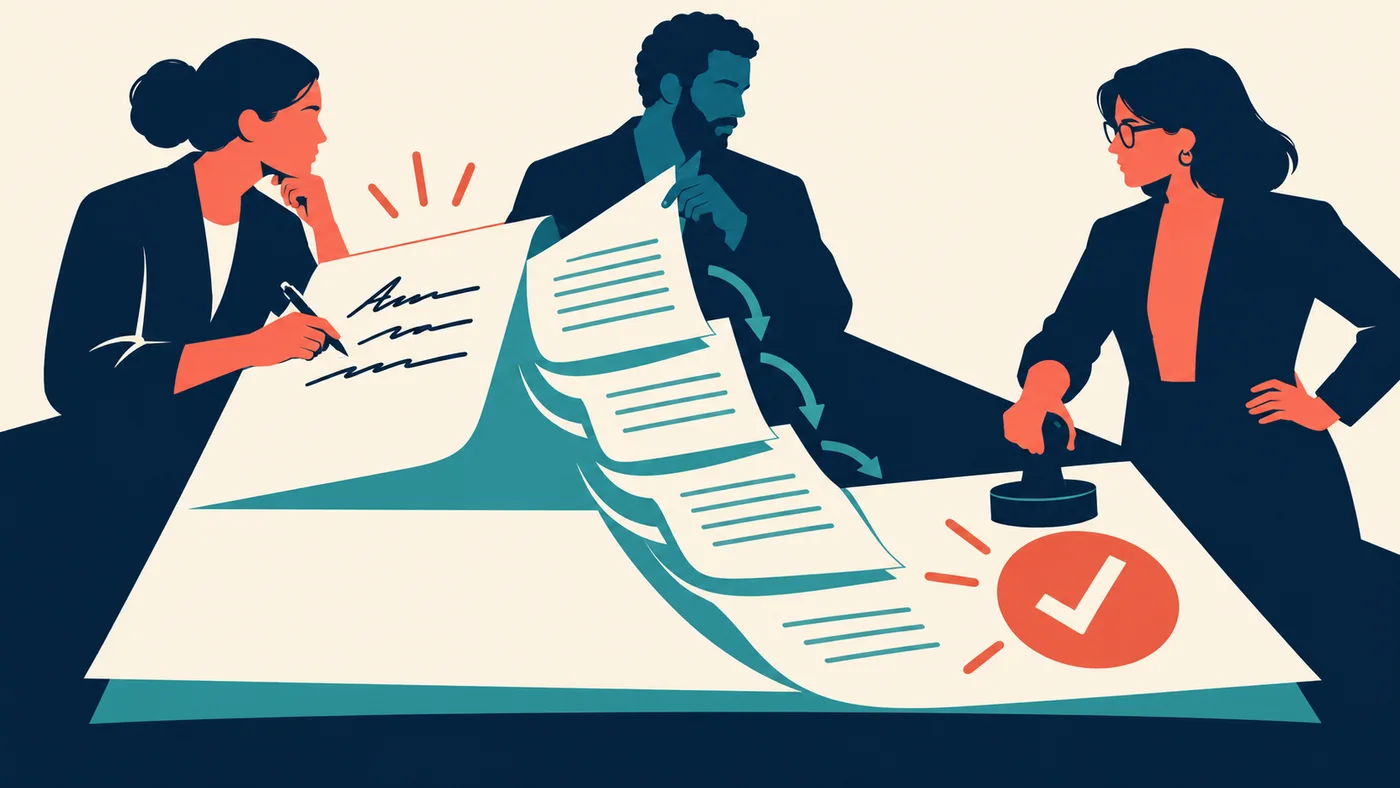
Consider a sales forecast. A useful live version might update an account’s last customer contact, a promised delivery date, and the risk that a deal misses the quarter. The first two can come from identifiable records. The third is a judgment that needs a reason and an owner. If the system revises a risk label, the reader should see the earlier value, the new value, the source, and who accepted the revision. A dashboard that quietly rewrites its own history may look current while becoming harder to audit.
There is an external reason to insist on the source trail. In a September 2026 research evaluation of workplace agents, researchers ran 192 matched tests. When agents had to work in a fuller, messier workplace rather than a carefully selected packet of context, the share that reached the needed evidence fell from 90.4% to 74.5%, and the share meeting the test criteria fell from 79.4% to 68.2%. Those are results from that evaluation, not a forecast for your company. They illustrate a practical risk: the agent can reason well enough and still fail because the relevant fact is buried, inaccessible, or not recognized.
What to try
Choose one recurring document that already has a human owner: a launch readiness sheet, an open-issue summary, or a customer-renewal plan. Give the agent approved sources and ask it to propose—not silently apply—updates. Track three measures: the share of important updates it found, the share of proposed changes accepted without correction, and the time the owner spent checking them. If it cannot point to the right record, pause expansion and fix access or data quality before testing a larger model.
The fourth lesson: lower effort may create more demand
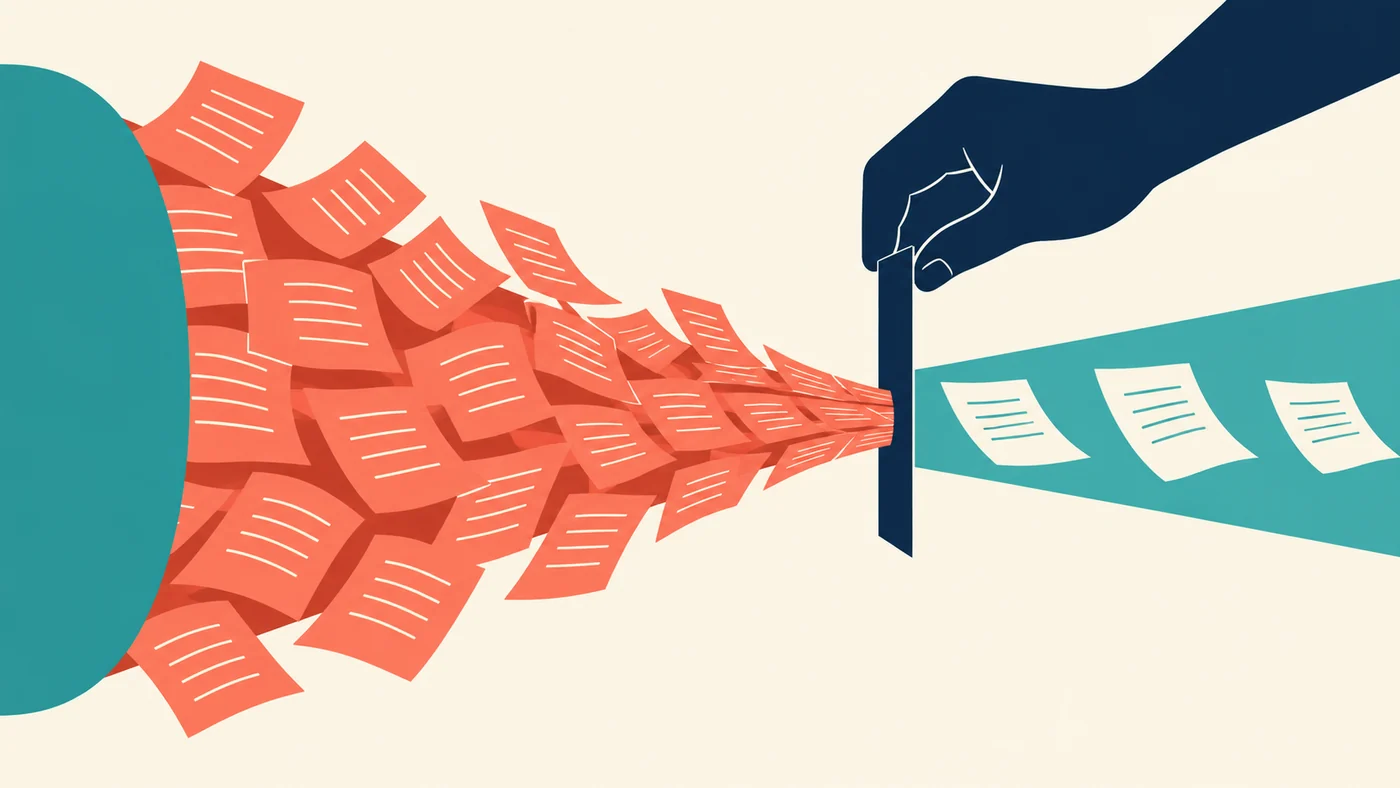
Altman argues that developers can do more now but face a higher bar. It is plausible that the same pattern reaches marketing, finance, service, and operations. Once a team can produce five campaign variants instead of one, it may want to test all five. Once a manager can request a daily analysis, she may start asking questions that were not worth assembling a report for before. That can create value, but it can also flood reviewers with drafts. “More output” is not yet “more outcomes.”
A longitudinal study of one company’s software work found that output per developer eventually doubled after an AI-adoption push, while substantive human review became a smaller share of proposed code changes. That is one company’s research setting, not an estimate for all software teams or proof that quality improved. It supports a narrower point: faster creation can move the constraint to review. A leader who gives AI to a team but does not protect reviewer time may trade a drafting bottleneck for an approval bottleneck.
Do not turn Altman’s optimism into a blanket headcount claim. Some tasks will shrink; others will expand because customers expect more or because checking the result takes work. The right unit of analysis is the completed service, sale, product change, or decision. Our AI business-case guide separates capacity released for other work from cash that actually leaves a budget.
A 30-day adoption test a company can actually run
The interview points to an attainable test, even if Dots itself is unavailable or unsuitable. Pick a real, recurring job whose inputs and owner are known. Do not start with “give everyone an agent.” Start with the service-review brief, campaign update, or launch-readiness document that a manager already maintains.
- Week 1 — establish the old way. Save the current document and record how long it takes to prepare, how often it misses a material change, and how many corrections arrive after circulation. Name the person responsible for the final version.
- Week 2 — let AI draft updates from a short list of approved records. Keep the first brief human-written. Require a link to the source next to every factual change. Do not grant send, publish, purchase, or record-update permission yet.
- Week 3 — run real cases. The owner accepts, edits, or rejects each update and records why. Include an awkward case: a stale record, conflicting sources, or a customer message that is easy to misread.
- Week 4 — decide based on accepted work. Compare preparation time, missed changes, correction effort, and the cost of the tool. Expand only if the new process improves the finished document without creating an unmanageable review queue.
Stop the test if the agent repeatedly cites the wrong source, exposes information outside its approved scope, or makes updates that the owner cannot reconstruct. A good pilot should make it easier to say no as well as yes. If the trial works, the next step is a slightly broader source set or a more frequent update—not unlimited permission.
Where I agree with Altman—and where I would wait
I agree that the most interesting AI adoption will make people more capable, not merely produce documents more quickly. The interview’s best moment is not an agent working overnight. It is Altman describing a new idea that begins with his own writing and gains momentum through repeated, low-friction follow-up. That is a model a small business can use: retain judgment, lower the effort of exploration, and keep testing what customers actually want.
I would wait before calling a persistent agent an autonomous teammate. Shipper’s early-use account includes bugs, Altman acknowledges current software is awkward for people and agents to share, and the research on workplace evidence shows how much can go wrong before an agent reaches the relevant fact. A company needs reliable permissions, an understandable activity history, and reviewers with time to check the work. Those are part of the product, not paperwork added afterward.
The decision for a leader this month is modest and important: pick one living piece of work, write its first purpose clearly, and see whether AI can keep it more accurate and useful between human decisions. If it can, you have found a better operating rhythm. If it cannot, you have learned which source, permission, or review step is missing before the stakes get higher.
Sources and scope
This is editorial analysis of The Every Podcast transcript of Dan Shipper’s interview with Sam Altman, published September 30, 2026. The article does not present an interview by AI Adoption Trends. Product availability comes from OpenAI’s Dots announcement; the workplace-evidence and review findings come from the linked original research papers. The operations, marketing, and sales scenarios above are constructed examples. The illustrations are AI-generated interpretations, not records of the conversation.
Weekly Newsletter
AI Adoption Weekly
New research, field guides, training studies, and tool decisions for operators.
No spam. Unsubscribe anytime.
Related Comparisons
Calculator
AI seat cost calculator
List price × headcount. You enter the hours and the operating assumptions.