
The 30-Day AI Workflow: How to Prove Value Before You Scale
Most companies build ambitious AI systems and hope they work. Winners do the opposite: they automate one boring task, measure ruthlessly, and only scale when the signal is unmistakable.
Published October 12, 2025· Updated Sep 16, 2026
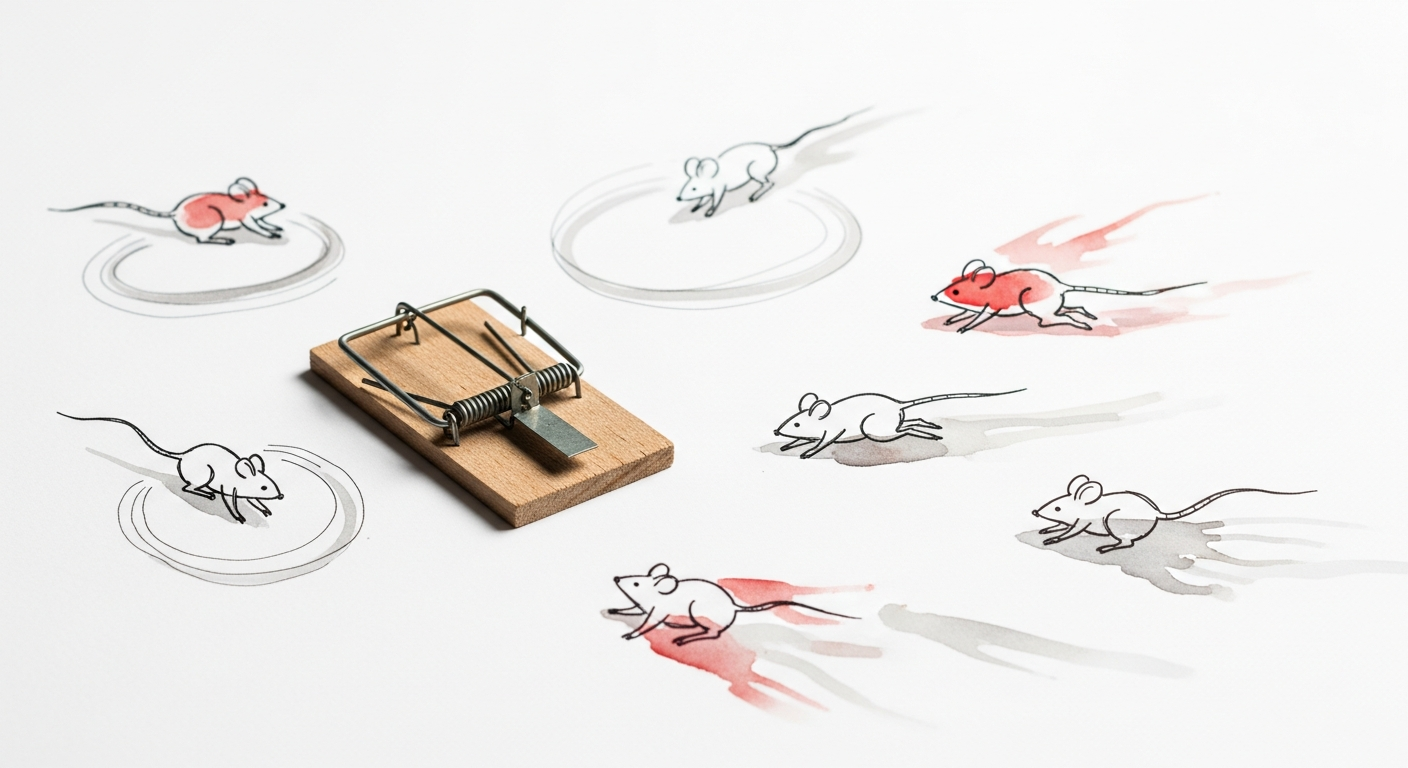
An insurance company spent eight months and a seven-figure budget building an AI model to automate claims triage. The model hit 90% accuracy on test data. It looked ready. They launched it across their entire claims operation, touching thousands of cases per week.
Two months later, the project was quietly shelved.
The model wasn't technically broken. The problem was darker: nobody could say whether it actually worked. Velocity improved by some amount. Error rates moved. Cost savings, if they existed, were lost in quarterly noise. When the executive team asked for a clear answer—did this save money or not?—there wasn't one. So they cut it.
The fallout was typical. The company wrote off AI as "not ready for us." The team dispersed. And a technically sound solution died not from engineering failure, but from the inability to see whether it mattered.
This pattern plays out across mid-market companies monthly. And it's entirely preventable.
The Hidden Problem: Scale Before Signal
Most companies reverse the order of operations. They get executive buy-in for "AI transformation." They assemble a team. They pick a problem that feels important and urgent. They deploy to production across the full scope. They wait for results. They feel disappointed.
The assumption underneath this is that AI works like traditional software: build once, deploy broadly, measure eventually. It doesn't. An AI system's value isn't obvious until you've actually run it in your specific context, observed it in production, and measured what changed. You can't infer this from a sandbox test or a pilot. You need signal from real work.
Here's what makes this worse: by the time you have that signal, you've already spent budget, burned credibility with the teams who'll use it, and consumed the patience of the executive who approved it. The people who built it have moved on. Finance never believed it would work anyway. And if the numbers come back unclear—which they usually do when you're measuring a company-wide deployment—nobody fights to clarify them. It's easier to move on.
The automation layer a founder can see
Branching scenarios. You still own the graph.
We may earn a commission · editorial verdicts remain independent
The core mistake: you're trying to scale before you have proof that scaling makes sense.
The Reframe: Start With One Boring Thing
Winners invert this. They don't build something ambitious and hope it scales. They build something small, prove it works with unambiguous data, then scale the proven version.
This isn't a pilot. Pilots are permission structures for inaction. You run a pilot, it works in theory, and then nothing changes because pilots aren't real. What we're describing is different: pick a single, isolated workflow. Automate it completely. Measure the output against a clear before-and-after metric. Run it for 30 days. Then expand or abandon based on what the data says.
The counterintuitive part: the workflow should be boring. You want something small enough that you can completely own the outcome, but real enough that the metrics matter. Not revenue-moving, necessarily. Real work.

Why boring? Because boring means no dependencies. No cross-functional negotiations. No hidden complexity. You can isolate the variable. You can measure the actual before-and-after. And when it works, you have a template you can replicate.
The 30-Day Framework
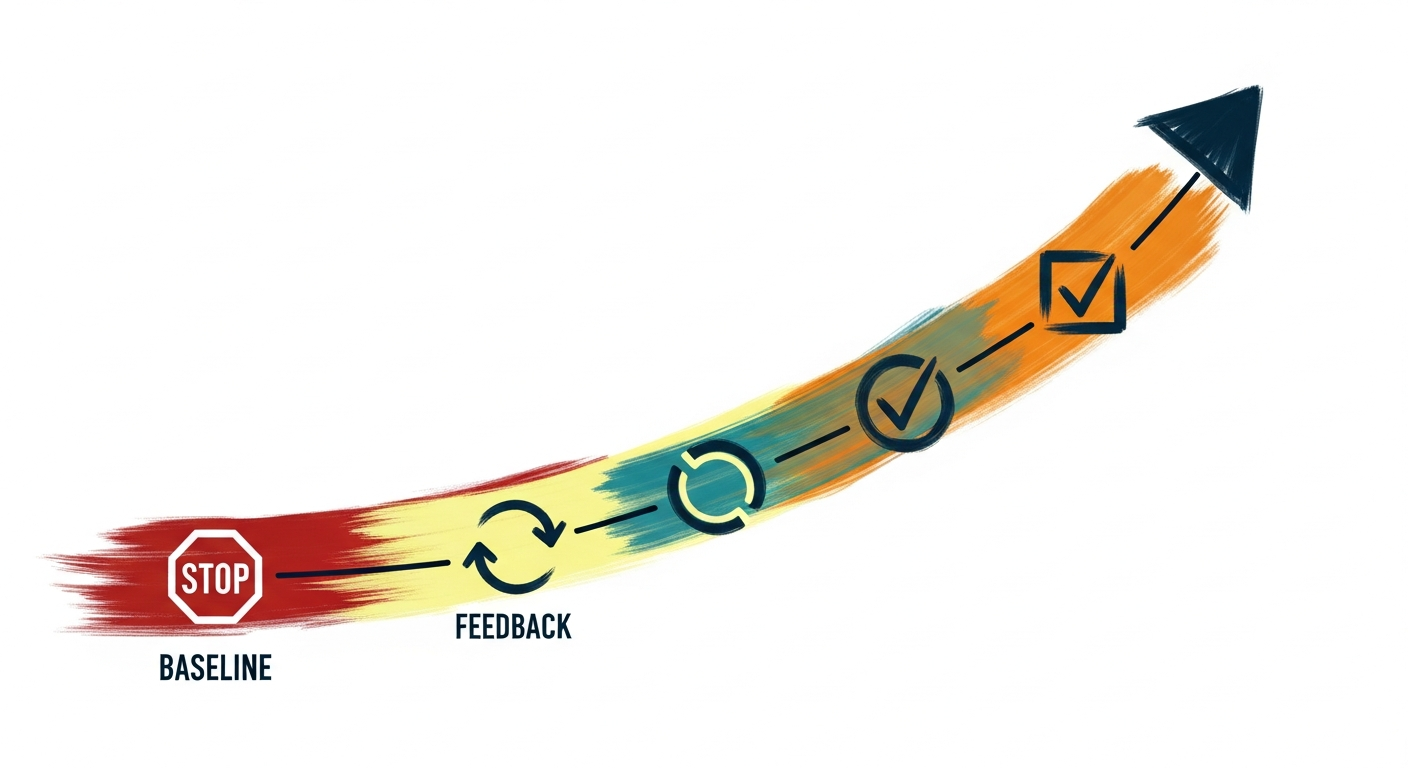
Days 1–5: Choose Your Workflow
A software company had three AI use cases on the table: automating support ticket routing (large scope, cross-team dependencies), generating product documentation (medium scope, owned by one team), and summarizing customer feedback (small scope, one person's daily task). They chose the third.
Every week, one person spent four hours reading a Slack channel and manually summarizing customer messages into a digest. No downstream dependencies. One owner. Clear input (messages). Clear output (summary). Measurable in minutes saved and quality of summary.
This is the right constraint. You're not trying to transform how the company operates. You're trying to prove that AI can reliably do one specific thing better or faster than today. The constraint forces clarity.
Your task: identify a workflow where one person spends 2–10 hours per week on a repetitive task. The input and output should be clear. The owner should be a single person or a small team. If it requires buy-in from more than two teams or if success is ambiguous, skip it.
Days 5–12: Measure the Baseline
Before you build anything, document the current state in excruciating detail. For the feedback company, they measured: how many minutes the summarization took (45 minutes per week), sampled five weeks of summaries, had two people rate quality on a 1–5 scale (average: 4.1), and documented the exact format used.
This becomes your control group. You're not proving that AI is better than human work in the abstract. You're proving it's better than your current human process, in your context, on your metrics. Specificity matters. Measurement matters more.
Most companies skip this step because it feels tedious. It's the opposite. This is where you decide whether you can actually measure success. If you can't articulate a clear before metric, you can't trust the after metric.
Days 12–25: Build and Iterate Fast
Start with the simplest possible solution. For the feedback company, it was a Claude prompt: "Here are this week's customer messages. Write a three-paragraph summary: new feature requests, reported bugs, competitive mentions. One paragraph per section."
They ran it on historical data from their baseline week. Then they iterated daily. The first output was too long—they shortened the instruction. It missed context—they added system examples from previous weeks. It grouped by topic instead of priority—they changed the instruction again. After three days, they had something worth comparing.
The key is tight feedback loops. The person who owns this task should review every iteration. They know what works. They spot the failure modes metrics miss. They also know whether the output is actually usable in their real workflow.
The bar isn't production-grade. The bar is good enough to test against the baseline.
Days 25–30: Measure and Decide
On day 25, run the AI version on the exact same sample data you used for the baseline. Use the exact same scoring method. Have the same people rate the quality. Time how long it takes to edit and finalize. Calculate actual cost if applicable.
For the feedback company: AI summaries took five minutes to generate, versus 45 minutes manually. Quality ratings: 4.3/5 (AI) versus 4.1/5 (human). Time saved: 40 minutes per week. Cost per summary: $0.02 (API calls) versus $15 (labor).
That's a clear signal. They expanded to all four product teams within a week. Same model. Same output structure. Just run four times.
If the signal is mixed or negative, you have data to explain why. You don't argue about it. The metric says it doesn't work, so you don't invest further. You pick a different workflow and run the 30 days again.
The Operator Checklist
- Find one workflow taking one person 2–10 hours per week with clear inputs and outputs. Get buy-in from that person and their manager only. No steering committees.
- Document the current process: how long it takes, what quality looks like, what failure is. Assign a measurable baseline (time, error rate, quality score). Measure it twice to be sure.
- Start with the simplest AI tool available—a prompt to Claude, ChatGPT, or an off-the-shelf platform. You're not building a proprietary model. You're testing whether automation works at all.
- Run daily iterations with the workflow owner. They review every output. Don't wait for perfection—good enough to compare is the bar.
- On day 25, measure against the baseline using the exact same method. If you improve by 20% or more on speed, accuracy, or quality, you have signal to expand.
- If the signal is unclear or negative, document why. Then pick a different workflow. Don't iterate infinitely on a bad use case.
- Once you've proven one workflow works, replicate the same 30-day process with the next one. You now have a template.
Why This Works
The 30-day workflow isn't just a way to test AI. It's a way to answer the question that actually matters: does this improve how we work right now, in measurable terms, without breaking something else?
That question can only be answered with real data from real work. Not from a presentation. Not from a benchmark. Not from an executive's intuition about what might work. From measurement.
The company that shelved their claims triage model had all the ingredients for success. They just proved it in the wrong order. They proved the model worked before they proved it mattered.

The companies winning with AI right now have reversed this. They prove it matters first. At small scale. With clear metrics. Then they scale what works. When they do, they're not hoping it'll work. They know.
The automation layer a founder can see
Branching scenarios. You still own the graph.
We may earn a commission · editorial verdicts remain independent
Weekly Newsletter
AI Adoption Weekly
New research, field guides, training studies, and tool decisions for operators.
No spam. Unsubscribe anytime.
Related Comparisons
Calculator
AI seat cost calculator
List price × headcount. You enter the hours and the operating assumptions.