
Microsoft Licensed Copilot to 200,000 People. Usage Still Plateaued.
Microsoft’s newest customer-zero account is useful precisely because the rollout did not create value on its own. Here is what the selected results prove, what they do not, and the workflow test executives should borrow.
Published September 21, 2026
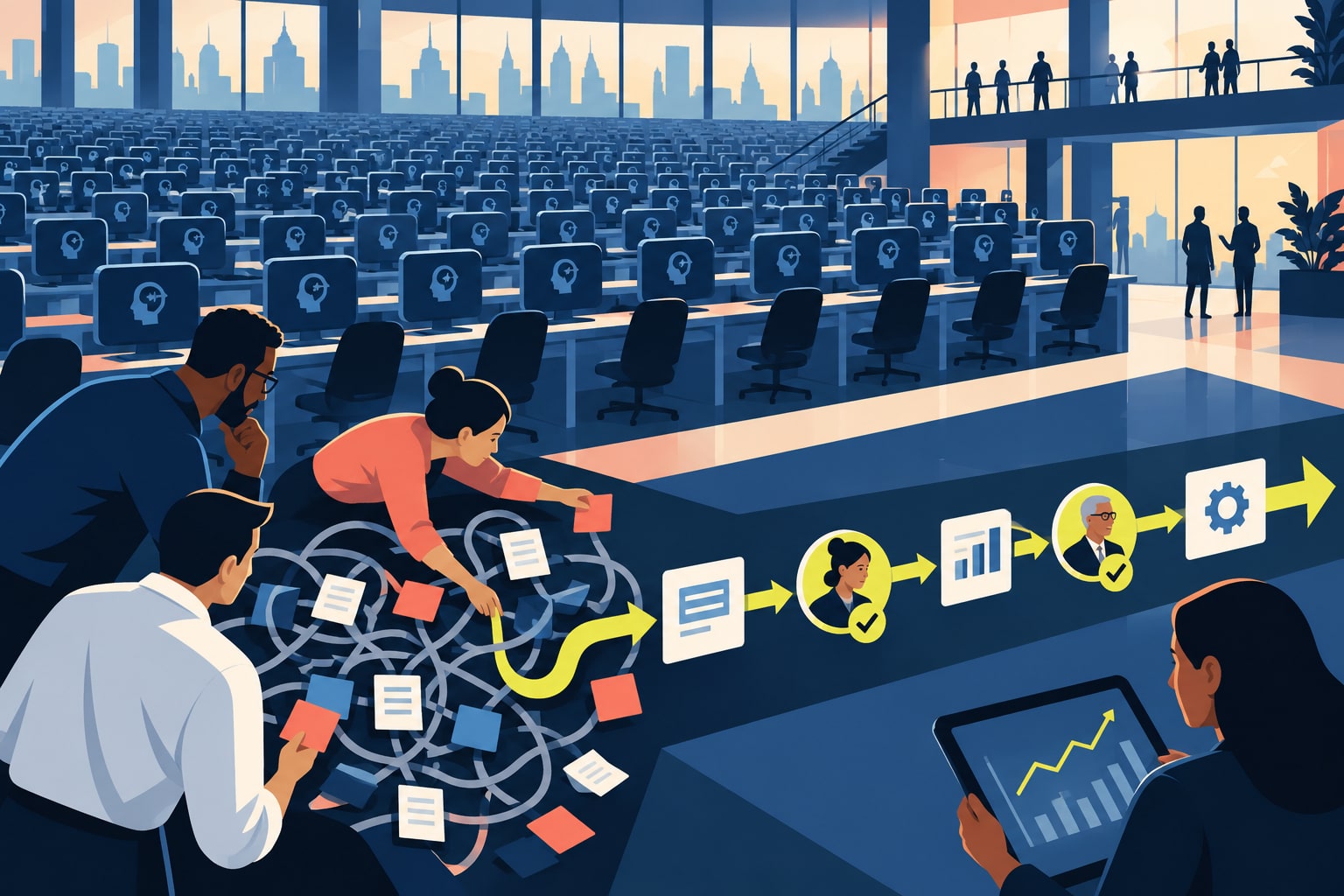
Picture the steering committee slide: more than 200,000 people have access, training is complete, and the adoption chart is flattening. That is not a hypothetical failure case from a reluctant buyer. It is how Microsoft describes an early stage of its own AI rollout. The important news is not that Microsoft later found large gains. It is that licenses, training, and usage were not enough to produce them.
What happened
On September 17, Microsoft published lessons from hundreds of internal AI efforts. It reported a 20% higher close rate for one sales group, up to a 75% cycle-time reduction in selected cloud supply-chain workflows, and a 35-day initial release by one nine-person engineering team. The company also says its early sales usage plateaued despite broad deployment. The change came after teams stopped treating adoption as the outcome and redesigned work around specific business goals.
The supply-chain example is the clearest. Microsoft says a 150-plus-person effort simplified processes, established a shared data source, and deployed more than 100 purpose-built agents. Across five monthly planning cycles, selected workflow time fell from roughly ten business days to less than 2.5. Demand-plan investigations that once took five to seven days reportedly moved to hours, with some completed in under 20 minutes.
What is real
This is credible evidence that a company can find material gains after it narrows the unit of change from “employee with Copilot” to “workflow with an owner, a queue, approved data, and a decision boundary.” Microsoft supplies group sizes, measurement windows, and important limits in its notes. Those details make the account more useful than a headline percentage.
The repeatable idea is the outcome-to-queue test. Name the outcome, identify the queue that delays it, and measure whether AI shortens the whole queue. If an assistant makes a draft faster but the work waits three days for review, the process did not become three days faster. It simply moved the delay.
The skeptical read
These are Microsoft-selected internal cases from the company selling the product and the transformation services around it. The 20% close-rate result compares 687 sellers with regular use against sellers with low use; it is not described as a randomized trial. The supply-chain number applies to selected workflows and five planning cycles. The 35-day release is one project, not a companywide engineering benchmark. None of those caveats erase the results. They do stop an executive from copying the percentages into a business case as expected returns.
The broader Census picture is another reason for restraint. Nationally representative business data showed AI use hovering around 17% to 20% through early May 2026, with larger firms adopting at higher rates. Microsoft is an unusually capable customer with deep product access, dedicated engineering, and more than 100 agents in one domain. Its operating pattern may travel better than its performance numbers.
What other leaders should take from it
- Treat seat activation as an input metric. Pair it with one business outcome, one queue-time measure, and one quality or risk measure.
- Map the full workflow before buying another agent. Mark every handoff, approval, system of record, and exception path.
- Put the people who do the work in the redesign room. Microsoft’s account repeatedly ties gains to domain experts working with engineers.
- Publish the denominator with every win: which team, how many cases, which dates, compared with what, and who validated the result.
The Monday-morning playbook
Choose one workflow that crosses no more than three teams and produces at least 30 comparable cases a month. Record its median completion time, 90th-percentile completion time, rework rate, and human review time for four weeks. Then redesign the process before adding AI: remove duplicate approvals, pick one source of truth, and state which actions the system may recommend, prepare, or execute. Run the new route on a contained slice for another four weeks.
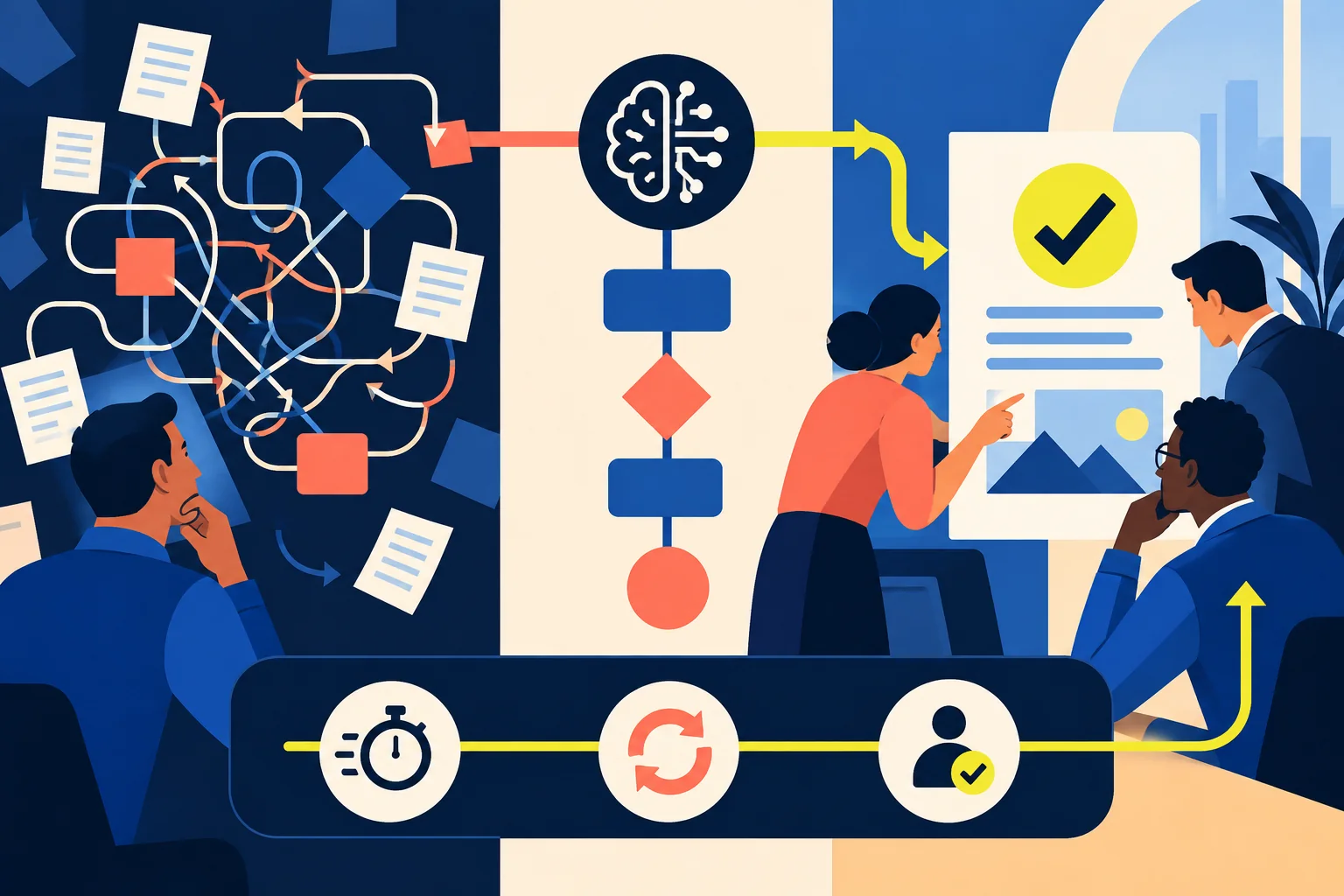
Scale only if the end-to-end time improves without a worse rework, exception, or customer outcome. If usage rises but the queue does not move, stop calling it adoption progress. Microsoft’s most valuable admission is that an impressive deployment can still be waiting for the work to change.
Primary sources
- Microsoft: What we’ve learned from Microsoft’s own AI transformation — September 17 account, case details, and methodological notes.
- U.S. Census Bureau: Large firms with at least 20 employees biggest AI users — National adoption context and survey wording.
The automation layer a founder can see
Branching scenarios. You still own the graph.
We may earn a commission · editorial verdicts remain independent
Weekly Newsletter
AI Adoption Weekly
New research, field guides, training studies, and tool decisions for operators.
No spam. Unsubscribe anytime.
Related Comparisons
Calculator
AI seat cost calculator
List price × headcount. You enter the hours and the operating assumptions.